Holiday Schedule
Chinese Holidays Calendar 2026
The all-in-one guide, schedule & calendar for holidays in China. Updated for the current year.
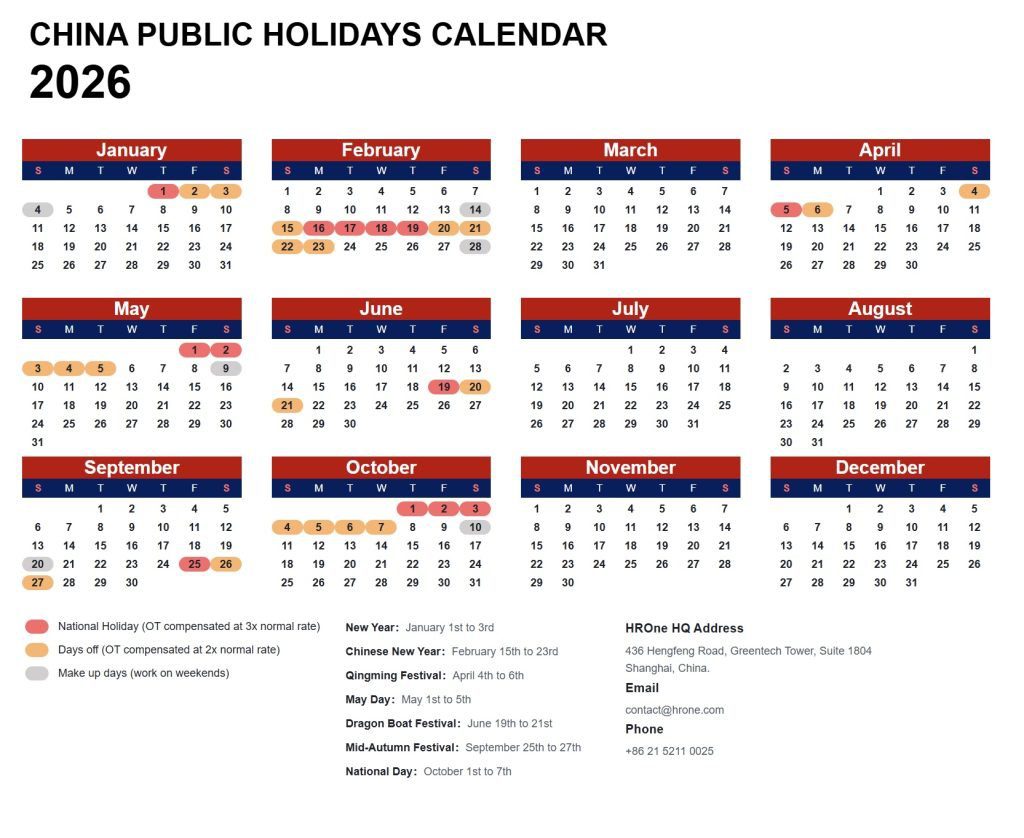
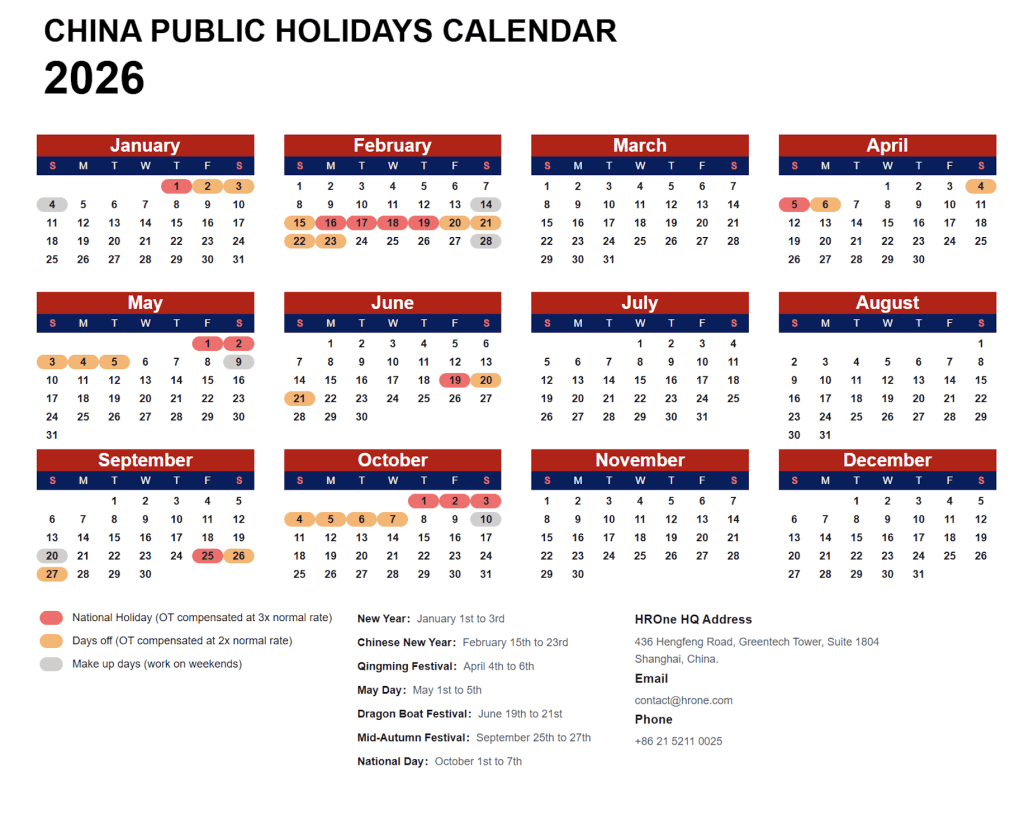
China celebrates an array of unique holidays that reflect its history, values, and societal rhythm. Understanding the Chinese holidays calendar is essential for businesses, travelers, and expatriates alike, as these dates significantly influence business operations, travel plans, and local festivities. For companies that already employ or plan to hire staff in China, it is also important to understand how public holidays affect work schedules, leave arrangements, and payroll planning. HROne’s Chinese holidays guide for employers provides a practical HR-focused reference for managing holiday schedules in China.
China’s official public holidays for 2026 are as follows:
Holiday | Date Range | Duration | Notes |
New Year’s Day | January 1 – January 3 | 3 days | Make-up workday on January 4 (Sunday). |
Chinese New Year / Spring Festival | February 15 – February 23 | 9 days | Includes Chinese New Year’s Eve; make-up workdays on February 14 (Saturday) and February 28 (Saturday). |
Qingming Festival | April 4 – April 6 | 3 days | Also known as Tomb-Sweeping Day. |
Labor Day | May 1 – May 5 | 5 days | Make-up workday on May 9 (Saturday). |
Dragon Boat Festival | May 19 – May 21 | 3 days | |
Mid-Autumn Festival | September 25 – September 27 | 3 days | Make-up workday on September 20 (Sunday). |
National Day | October 1 – October 7 | 7 days | Make-up workday on October 10 (Saturday). |
- New Year
- Chinese New Year / Chinese Spring Festival
- The Lantern Festival
- International Women’s Day
- QingMing / Tomb Sweeping Festival
- Labor Day
- Dragon Boat Festival
- Double Seventh Festival
- Mid-Autumn Festival
- National Day
- China’s Singles’ Day
New Year's Day
New Year’s Day in China is celebrated on January 1st, aligning with the Gregorian calendar. While it is not as culturally significant as the traditional Chinese New Year, New Year’s Day is still recognized as a public holiday, offering a day off for employees in China.
Urban centers and international communities often mark the occasion with countdown events, fireworks, and festive gatherings. Many businesses use this time to review the past year’s achievements and set goals for the new one. For expatriates and travelers in China, it provides an opportunity to enjoy a relaxed atmosphere before the bustling Spring Festival season begins.
Chinese New Year / Lunar Year / Spring Festival
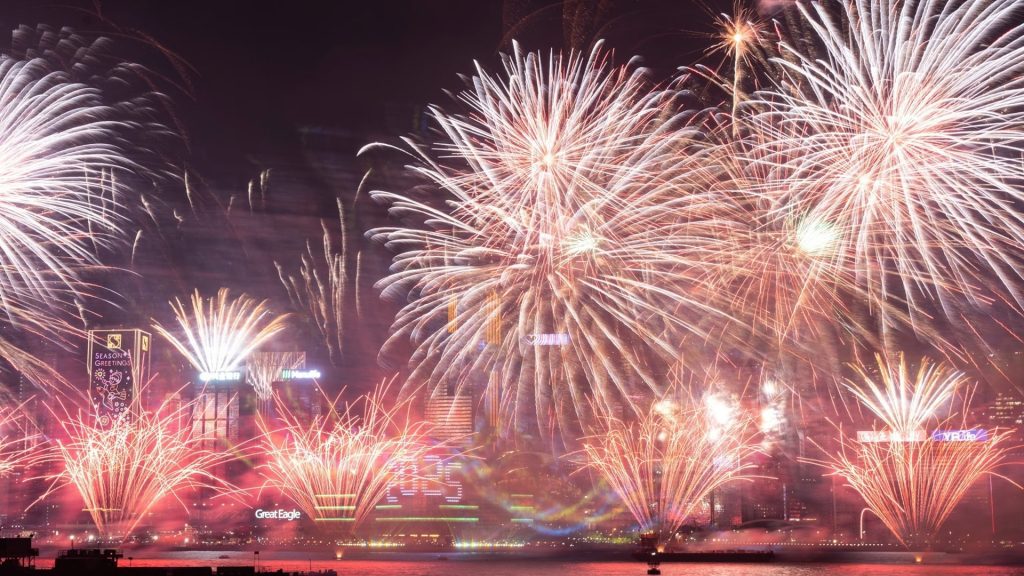
Chinese New Year, also known as the Spring Festival (春节, Chūn Jié), is the most significant and widely celebrated holiday in China. It marks the beginning of the lunar calendar, with the date varying each year but typically falling between late January and mid-February. In 2026, it begins on February 15th.
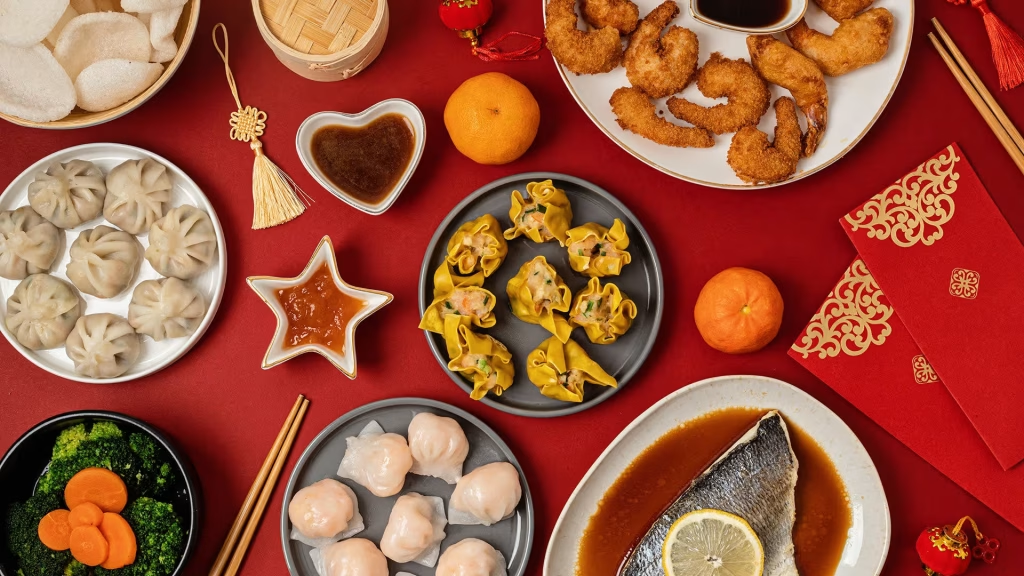
This festival is a time for family reunions, with millions of people traveling across the country in what is known as the world’s largest annual human migration. Traditional customs include cleaning homes to sweep away bad luck, decorating with red lanterns and couplets, and giving red envelopes (红包, hóng bāo) filled with money to friends and family.
Festive meals featuring symbolic foods, such as dumplings and fish, are a cornerstone of the celebration. The holiday also includes vibrant events like dragon and lion dances, temple fairs, and spectacular firework displays. Chinese New Year embodies themes of renewal, prosperity, and family, making it a joyous and culturally rich period across the country.
QingMing Festival / Tomb Sweeping Festival
The Qingming Festival, also known as Tomb-Sweeping Day (清明节, Qīngmíng Jié), is a traditional Chinese holiday dedicated to honoring ancestors and loved ones who have passed away. Observed annually on April 4th or 5th, this day is marked by families visiting ancestral graves to clean the tombstones, offer prayers, and make offerings such as food, flowers, and joss paper (symbolic money).
The festival also celebrates the arrival of spring, and many people take the opportunity to enjoy outdoor activities like flying kites and taking walks in nature. Rooted in over 2,500 years of history, Qingming embodies themes of filial piety, remembrance, and renewal. For many, it’s a solemn yet meaningful occasion to reflect on family bonds and cherish the continuity of life while appreciating the beauty of the spring season.
Labor Day / May Day
Labor Day in China (劳动节, Láodòng Jié), celebrated annually on May 1st, is a public holiday dedicated to recognizing the contributions of workers. Originally established to honor the global labor movement, it has evolved into a time for relaxation and leisure in modern China.
The holiday often spans several days, giving people an opportunity to travel, spend time with family, or engage in recreational activities. Major cities witness a surge in domestic tourism, with attractions, parks, and shopping centers bustling with visitors. Labor Day reflects the importance of work-life balance and serves as a reminder of the workforce’s pivotal role in driving China’s economic progress.
Dragon Boat Festival
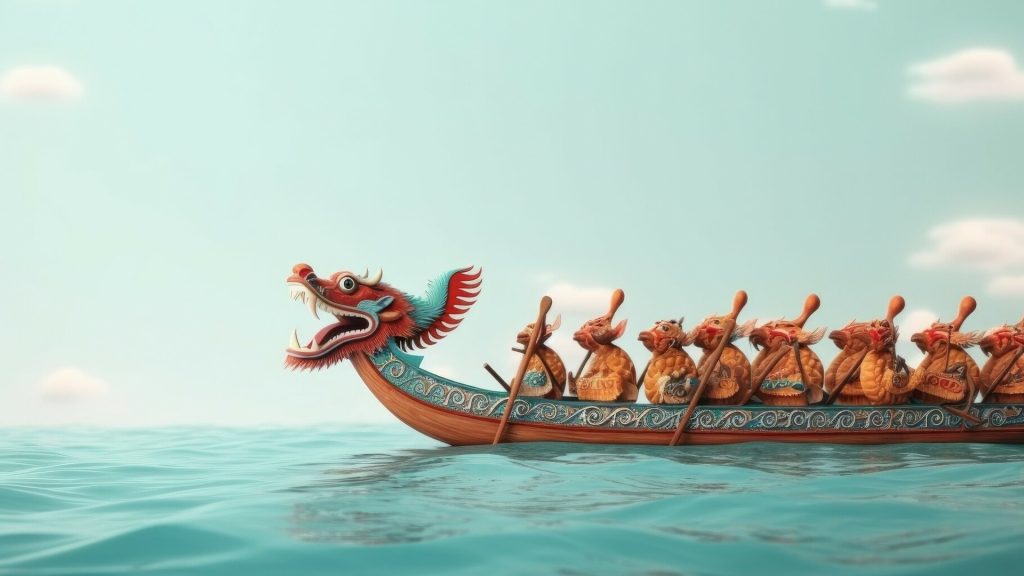
The Dragon Boat Festival (端午节, Duānwǔ Jié) is a traditional Chinese holiday celebrated on the fifth day of the fifth lunar month, which falls on May 19th, 2025. This vibrant festival honors the memory of Qu Yuan (屈原), an ancient Chinese poet and patriot who drowned himself in protest against corruption. Central to the celebrations are dragon boat races, where teams row ornately decorated boats in competitive displays of unity and strength.
Families also prepare and enjoy zongzi (粽子), sticky rice dumplings wrapped in bamboo leaves, as a symbolic offering to Qu Yuan’s spirit. The festival is infused with cultural traditions aimed at warding off evil spirits and ensuring good health, including wearing sachets of herbs, hanging mugwort leaves, and drinking realgar wine. The Dragon Boat Festival reflects a blend of historical reverence, communal spirit, and the enduring cultural heritage of China.
Golden Week / National Day
National Day in China (国庆节, Guóqìng Jié), celebrated annually on October 1st, commemorates the founding of the People’s Republic of China in 1949. This day marks the beginning of the Golden Week, a seven-day holiday that extends through October 8th in 2025, offering people a significant break to travel and celebrate.
The occasion is marked by grand festivities, including military parades, flag-raising ceremonies, and large-scale fireworks displays in major cities like Beijing and Shanghai.
Many take advantage of the long holiday to visit family or travel domestically or abroad. However, this period is also one of the busiest for travel, with packed transportation hubs and crowded tourist sites.