
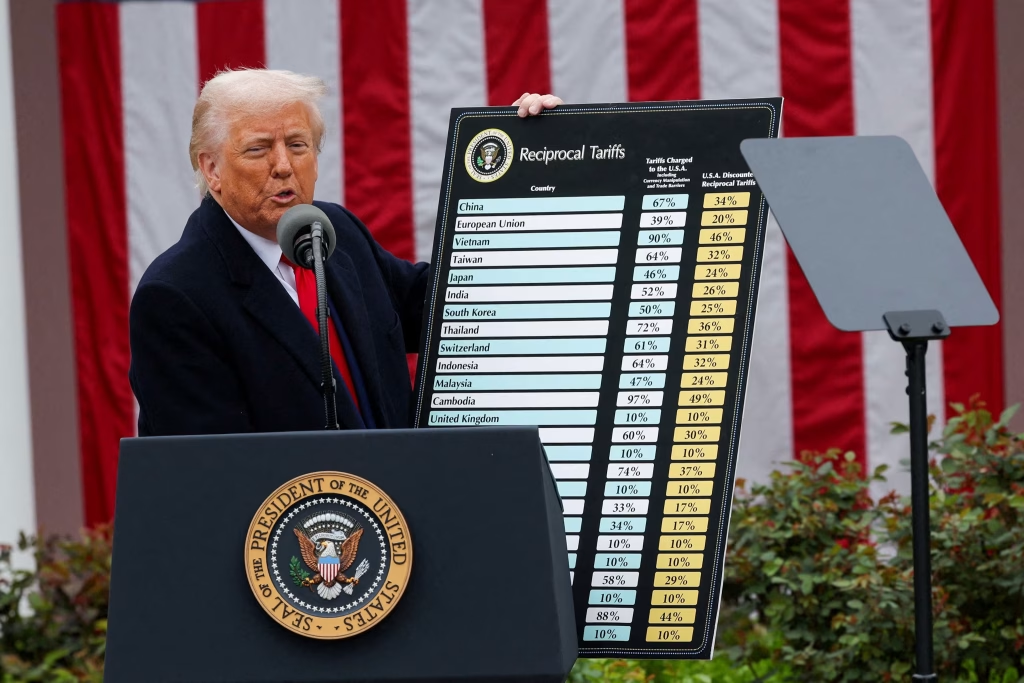
Trump’s proposed 50% tariffs on Chinese goods have caused a stir, but the boldest business response isn’t what you’d expect. Instead of pulling out of China, many companies are doing the opposite: setting up shop in China to protect their margins, tap into local markets, and dodge the incoming trade penalties.
Trump’s Tariff Threat: A Wake-Up Call for Global Businesses
In March 2025, Donald Trump publicly announced his plan to impose a 50% tariff on all Chinese imports. This aggressive move would significantly impact industries like:
- Consumer electronics
- Textiles and apparel
- Automotive parts
- Packaging and plastics
- Machinery and tools
For US-based importers, this could mean severe margin loss, price hikes, or shrinking competitiveness, especially for businesses that rely heavily on Chinese manufacturing.
The Counterintuitive Strategy: Move Into China
While the intention behind these tariffs is to decouple from China, the real-world effect might be the opposite. Many global businesses are now exploring a strategic workaround:
By registering a company and producing within China, businesses can avoid US tariffs and continue to operate efficiently within global supply chains.
Here’s how it works:
- Register a Wholly Foreign-Owned Enterprise (WFOE) in China
- Manufacture products locally, either independently or through trusted OEMs
- Sell products to China’s domestic market or export to non-US markets without penalty
Why This Strategy Makes Sense
Setting up operations in China offers several advantages beyond dodging US-imposed tariffs:
✅ Localized Manufacturing = Lower Costs
Producing within China reduces logistics expenses, import/export duties, and local compliance headaches.
✅ Massive Domestic Market Access
China is the world’s second-largest consumer market. A locally registered entity can sell through platforms like Tmall, JD, Pinduoduo, Douyin, and Xiaohongshu, but this requires the correct business setup and ICP licensing.
✅ Flexibility for Global Exports
A Chinese entity can easily re-export goods to ASEAN, Europe, Africa, and Latin America—without the tariff risk looming over direct US imports.
What Businesses Are Doing Right Now
Here are real options business owners are actively pursuing in response to the tariff escalation:
- Setting up a WFOE to establish a long-term manufacturing presence
- Moving final assembly or repackaging steps outside of China to shift product origin
- Focusing on the Chinese market through e-commerce and B2B sales
- Partnering with local factories while retaining brand ownership and IP
- Shifting HQ functions like R&D and sourcing to China for better oversight and cost control
The Required Setup: What You Need to Operate in China
To launch successfully in China, businesses will need to take care of the following:
- WFOE Registration: The foundation for doing business legally in China
- Commercial ICP License: Required to operate online stores on major Chinese platforms
- Local Tax and Labor Compliance: Including accounting, social insurance, and employee onboarding
- Trademark Protection: To prevent IP issues and bad-faith registration
Is This the New Normal?
If tariffs become a long-term policy direction, then setting up in China isn’t just a short-term fix, it’s a “strategic repositioning“. The move offers stability, access to new revenue streams, and a hedge against unpredictable global trade politics.
Final Thoughts: Time to Rethink China Strategy
The global supply chain is shifting fast. Trump’s tariff threat may be intended to squeeze China, but the shock twist is this:
To beat China tariffs, many businesses are moving to China.
If you’re importing from China or concerned about future risks, now is the time to act. FDI China helps businesses like yours register, launch, and thrive in China, with full legal compliance and strategic support.