
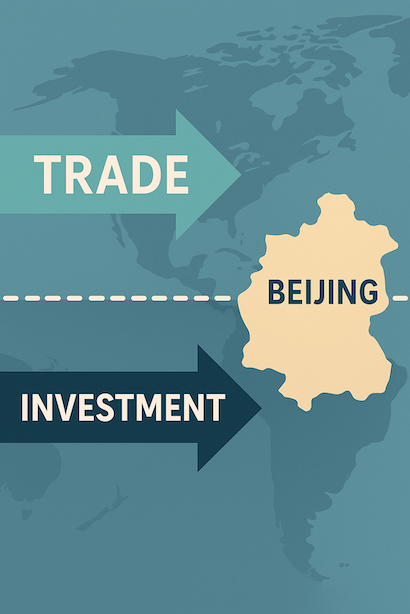
SAFE Beijing has announced a new phase of high-level opening to promote cross-border investment and trade. The initiative underscores China’s ongoing effort to attract foreign capital, facilitate smoother financial transactions, and strengthen regulatory transparency. By easing foreign exchange procedures and supporting global enterprises operating in Beijing, the State Administration of Foreign Exchange (SAFE) aims to create a more open, stable, and globally integrated financial environment.
Overview
On July 25, 2025, the Beijing branch of China’s State Administration of Foreign Exchange (SAFE) introduced a new policy initiative aimed at facilitating cross-border trade and investment. The initiative focuses on streamlining foreign exchange (FX) operations and improving capital account openness. This move aligns with China’s broader national strategy to stabilize foreign investment and boost international business confidence.
Simplifying Cross-Border Trade
SAFE Beijing rolled out five specific pilot policies to ease trade-related FX processes:
- FX Settlement Optimization: Banks are encouraged to streamline foreign exchange settlement for new trade formats such as cross-border e-commerce by automating transaction verification.
- Trade Netting Expansion: More enterprises can use netting for import/export transactions, reducing the number of FX transfers and associated costs.
- Simplified Forex for Current Accounts: Qualified companies with strong compliance records may now process forex receipts/payments under current accounts without lengthy reviews.
These changes are designed to reduce documentation and improve operational efficiency, particularly for SMEs and digital exporters. The use of technology and compliance-based risk management helps reduce friction in international trade transactions.
Opening Cross-Border Investment Channels
The second part of the policy addresses cross-border investment and financing:
- Capital Account Facilitation: SAFE Beijing signaled a move to relax controls on capital inflows and outflows, making it easier for companies to obtain foreign capital or reinvest profits.
- Cash Pooling for Multinationals: The new measures support multinational firms in managing RMB and FX cash flows more freely across borders.
- Streamlined Foreign Debt Procedures: Banks may soon register cross-border borrowings on behalf of enterprises, reducing approval times for accessing overseas funds.
These changes are expected to attract more Qualified Foreign Limited Partners (QFLP) and promote reinvestment of foreign profits into local projects.
Alignment with National Strategy
The Beijing initiative supports China’s broader opening-up agenda. In early 2025, the central government approved 77 reforms—such as digital trade facilitation and fund management—that originated in the Shanghai Free Trade Zone and are now being expanded nationwide.
China’s leadership continues to highlight the dual goals of high-standard opening-up and improved financial supervision. SAFE’s Director emphasized a commitment to reducing policy uncertainty and strengthening foreign trade and investment frameworks.
Implications for Global Businesses
Foreign-invested firms and exporters operating in Beijing stand to benefit:
- Faster payment settlements and reduced FX documentation;
- Greater flexibility in capital deployment and international borrowing;
- Improved liquidity management for MNCs via cross-border fund pooling.
For international companies evaluating China as an investment destination, these policies reflect a clear message: Beijing is open for business—with fewer administrative barriers and better compliance incentives.
Top Sources:
- SAFE Official Release: https://www.safe.gov.cn/beijing/2025/0725/2600.html
Need help entering China? Whether you’re a global investor exploring new opportunities or a business expanding operations, our experts can help you navigate every step. Visit FDIChina to start your China expansion journey today.