
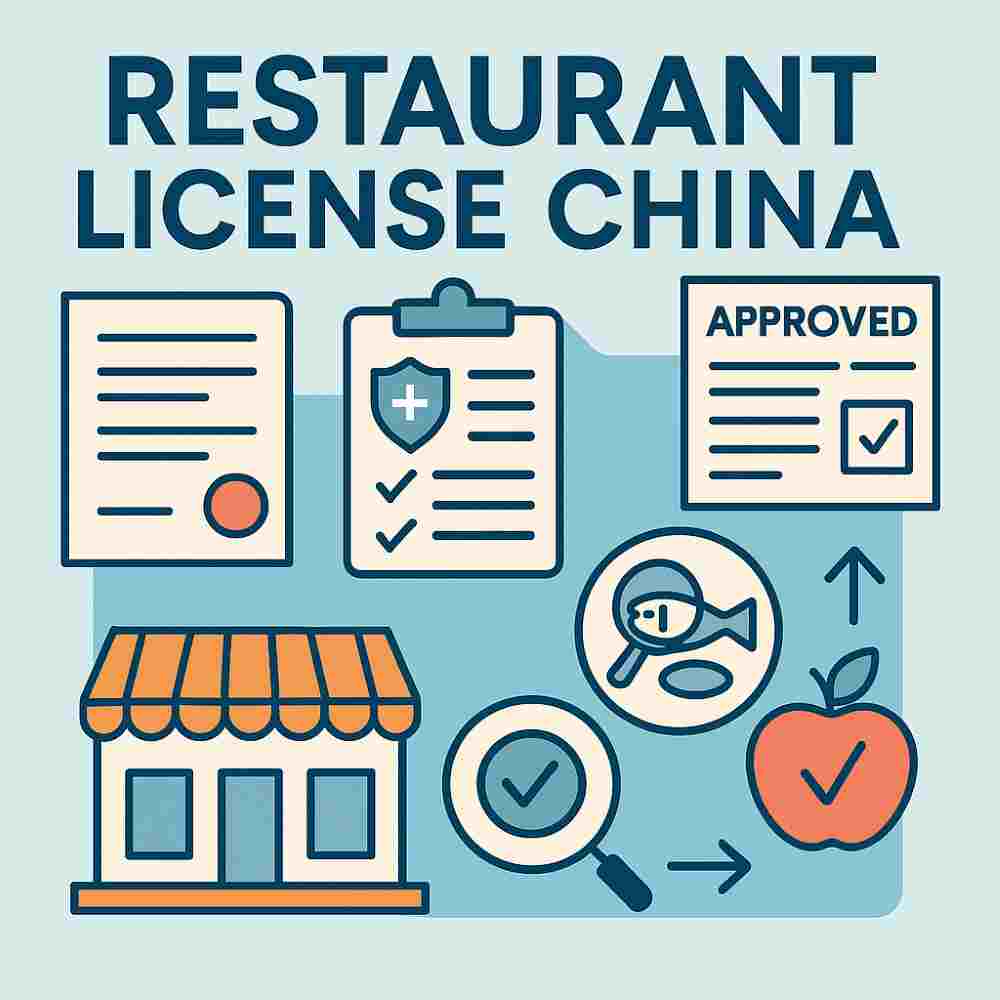
Restaurant license China is the core approval required for any local or foreign business planning to operate a restaurant, café, bar, bakery, food stall, cloud kitchen, or catering outlet in China. Because food service directly affects public health, China enforces one of the strictest restaurant-licensing systems in the world. Investors must therefore understand restaurant license China requirements, hygiene standards, kitchen regulations, environmental rules, and long-term compliance to legally open and operate a restaurant without interruption.
This guide explains everything investors need to know—from permit categories and kitchen layout requirements to inspection steps, operational rules, and renewal obligations—so your food business in China can launch quickly and operate with confidence.
- Key restaurant license China requirements
- China food business permit process for restaurants
- Commercial kitchen and hygiene standards
- Staff health certificates and training requirements
- Food-safety, labeling, and sanitation obligations
- Foreign-invested restaurant setup and business scope
- Environmental approvals and fire-safety rules
- On-site inspections and documentation reviews
- Common compliance risks and penalties
- Long-term operational and renewal requirements
Understanding the Restaurant License China Framework
China regulates restaurants under the Food Safety Law, Hygiene Law, Fire-Safety regulations, and local municipal rules. The local Administration for Market Regulation (AMR) manages restaurant licensing, inspections, and compliance checks. Restaurants must also comply with public-health standards promoted by institutions such as the World Health Organization and international hygiene guidance referenced by regulators. However, restaurant license China approval strictly follows Chinese domestic requirements.
Restaurant License China Requirements
To obtain a restaurant license China, businesses must secure a legal entity, an approved business scope, and a compliant commercial kitchen that meets zoning, ventilation, sanitation, and fire-protection standards. Restaurants must also prepare hygiene procedures, employee health records, kitchen zoning maps, equipment lists, and cleaning logs. Authorities check that raw and cooked food areas are separated and that kitchens follow “clean-to-dirty” workflow principles to prevent contamination.
Long-Tail Keyword: Restaurant License China Requirements
Restaurant license China requirements also include proper food-storage conditions, temperature control systems, waste-management plans, pest-control measures, and compliant kitchen materials. Stainless-steel countertops, grease traps, and commercial ventilation are mandatory in most cities. Restaurants must display hygiene grades and maintain staff health certificates that are updated annually.
China Food Business Permit Process for Restaurants
The restaurant licensing process typically includes:
- Business entity formation: Most foreign investors set up a WFOE or joint venture before applying for a restaurant license China.
- Business scope definition: The scope must include “restaurant services,” “catering services,” or a similar term.
- Premise selection: The site must meet fire and zoning regulations for food service.
- Kitchen design submission: Floor plans and zoning diagrams must be approved by AMR.
- Hygiene permit application: Submit food-safety documents, staff health certificates, and sanitation plans.
- On-site inspection: Officials check kitchen layout, equipment, workflow, hygiene, and safety compliance.
- Restaurant license China issuance: Once approved, the restaurant may legally begin operations.
Long-Tail Keyword: China Food Business Permit Process
The China food business permit process also requires restaurants to maintain procurement records, supplier lists, sanitation logs, and temperature-monitoring sheets. Regulators may request these records during inspections.
Commercial Kitchen and Hygiene Requirements
Restaurant kitchens must meet strict design and equipment requirements. China mandates that kitchens include separate zones for raw materials, semi-finished food, cooked food, warewashing, and waste disposal. Grease traps, ventilation systems, and anti-slip flooring are required. Regulations often reference international hygiene practices from organizations such as the ISO, though China enforces additional local requirements.
Long-Tail Keyword: China Restaurant Safety Compliance
To achieve China restaurant safety compliance, businesses must also adopt sanitation schedules, disinfection logs, and traceability systems for ingredients. These systems must be updated daily and reviewed during AMR inspections.
Staff Requirements and Health Certificates
All food-handling employees must obtain a health certificate confirming freedom from infectious diseases. Staff must also complete food-safety training and maintain documented knowledge of hygiene procedures, cross-contamination prevention, and equipment handling.
Foreign-Invested Restaurants: Setup and Compliance
Foreign restaurants must register their entity, obtain tax numbers, and ensure their business scope aligns with restaurant activities. Many foreign investors reference compliance resources such as FDI China’s China Market Entry Guide to ensure alignment between entity registration and restaurant license China requirements.
Fire-Safety, Environmental, and Waste-Management Rules
Restaurants must install fire extinguishers, smoke detectors, fire blankets, and approved gas systems. Restaurants using open-flame cooking must undergo additional fire-safety inspection. Wastewater and grease management must comply with municipal environmental rules, and some cities require grease trap maintenance logs.
On-Site Inspections and Compliance Monitoring
Authorities regularly conduct inspections to verify sanitation, equipment status, food labeling, storage conditions, and supplier documentation. Inspectors check hygiene-grade display cards, procurement certificates, and kitchen zoning. Restaurants failing inspections may face warnings, fines, or temporary shutdowns.
Common Challenges and How to Avoid Penalties
Many restaurants struggle with documentation inconsistencies, outdated staff certificates, non-compliant kitchen materials, or improper temperature records. Businesses must therefore conduct internal audits, update workflows, maintain hygiene logs, and ensure all equipment is serviced regularly.
Conclusion
The restaurant license China system ensures food safety, public health, and operational integrity. By meeting regulatory requirements, preparing strong documentation, designing compliant kitchens, and maintaining strict hygiene procedures, companies can open successful restaurants in China’s rapidly expanding food-service market. With consistent compliance, restaurants can avoid penalties and build a long-term footprint in China’s competitive culinary landscape.