
Published: November 2026 | Updated for GACC Announcement No. 150 of 2026
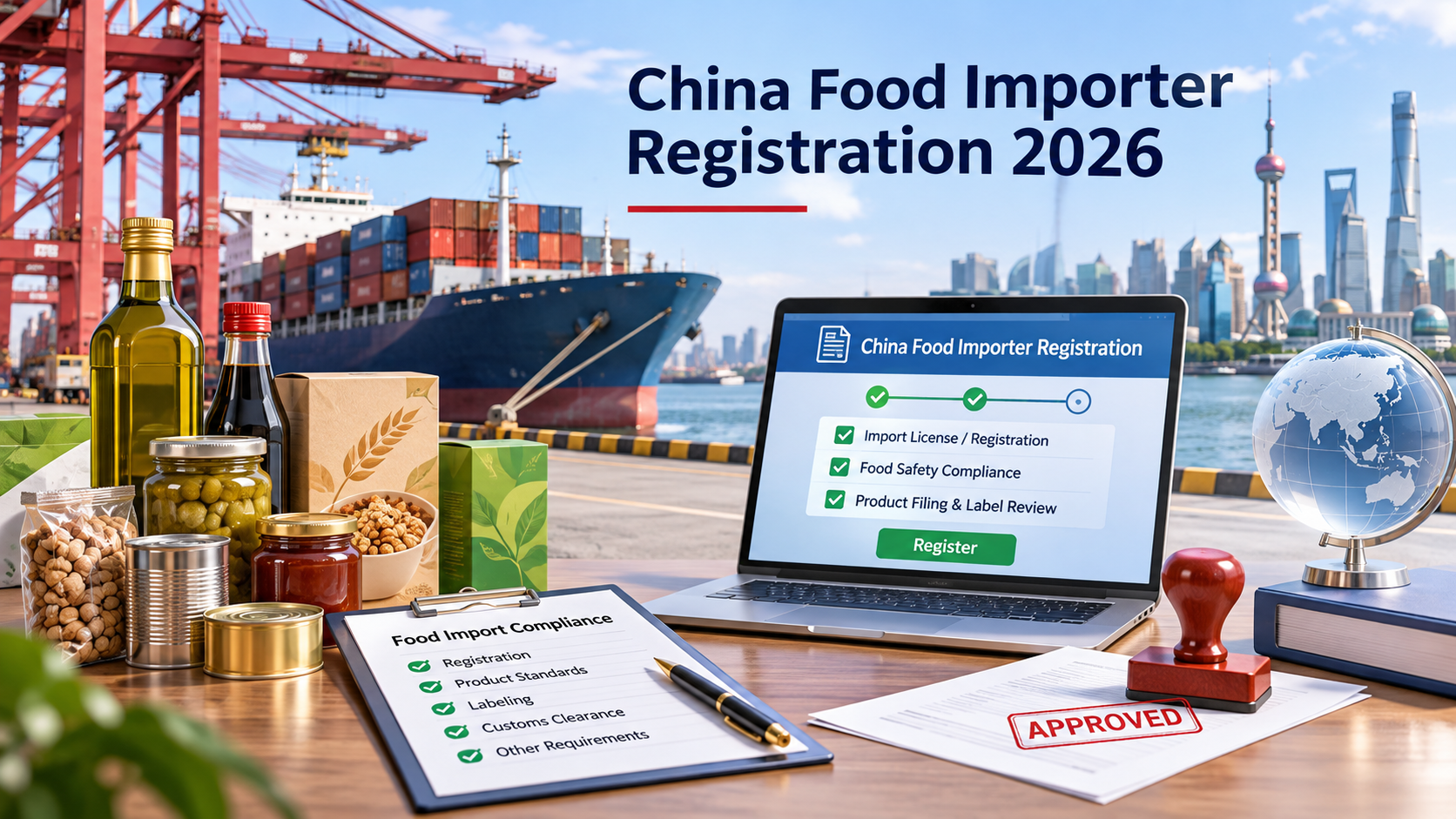
China has introduced revised food importer and exporter filing rules, creating a more streamlined registration process for overseas food brands and companies importing food products into the Chinese market.
On October 23, 2026, the General Administration of Customs of China (GACC) released Announcement No. 150 of 2026, introducing updated Administrative Provisions on Filing of Importers and Exporters of Imported Food (进口食品进出口商备案管理规定).
The revised rules took effect immediately and replaced the relevant provisions established in 2012.
For overseas food producers, international trading companies, and foreign-invested enterprises (WFOEs) planning to import food into China, these changes are important.
The good news is that the updated regulations simplify documentation and reduce processing times. However, businesses must still comply with China’s customs registration, food safety, and product-specific regulatory requirements.
This guide explains the key changes, who needs to register, how to complete the filing process, and what foreign businesses should prepare before importing food into China.
1. What Are China’s New Food Importer Registration Rules in 2026?
China’s food importer filing system is designed to improve food traceability and ensure that companies involved in importing food products can be identified and monitored by customs authorities.
Under GACC Announcement No. 150 of 2026, the regulations apply to two main categories of businesses:
- Overseas food exporters or agents supplying food products to China.
- Domestic food importers responsible for importing food products into China.
Importantly, food importer filing itself is not a new requirement introduced in October 2026. China has operated a filing system for imported food traders for many years.
The 2026 update primarily focuses on making the process more efficient while strengthening regulatory supervision.
Key Changes Under GACC Announcement No. 150 of 2026
| Regulatory Item | Previous Requirements | New 2026 Requirements |
|---|---|---|
| Domestic food importer filing timeline | 5 working days | 3 working days after acceptance |
| Overseas exporter/agent timeline | No equivalent explicit deadline in the previous provisions | 3 working days after acceptance |
| Domestic importer application form | 20 information items | 16 information items |
| Overseas exporter/agent application form | 20 information items | 10 information items |
| Registration validity | Previously governed by the applicable filing system | Explicitly long-term validity |
| Filing information changes | Existing change-reporting obligations | Changes to be filed within 60 days |
These changes should make the application process more predictable, particularly for businesses entering China for the first time.
However, the three-working-day processing period applies after customs accepts a complete application. It does not include the time required for company incorporation, customs trader registration, document preparation, or additional regulatory approvals.
2. Who Needs Food Importer Registration in China?
One of the most common sources of confusion for foreign food businesses is determining which company must complete which registration.
China distinguishes between overseas food manufacturers, overseas exporters or agents, and domestic food importers.
These are separate legal roles, and the relevant registration requirements may apply simultaneously.
A. Overseas Food Exporters or Agents
Foreign companies exporting food products to China must generally complete the applicable exporter or agent filing with GACC.
For example, a European food trading company selling packaged food products to a Chinese importer may need to complete overseas exporter filing even if it does not own a company in China.
Successful overseas exporter or agent filing results in a registration code issued by customs.
This code is relevant when the products are declared for import into China.
B. Domestic Food Importers
A Chinese company importing food products must complete the domestic food importer filing.
This requirement also applies to foreign-owned companies established in China.
For example, a wholly foreign-owned enterprise registered in Shanghai that imports packaged snacks, beverages, or bottled spirits for domestic distribution would generally need the appropriate food importer filing.
Before applying, the company must:
- Hold appropriate business entity qualifications in China.
- Complete, or apply simultaneously for, customs registration as an import/export consignee or consignor.
- Submit the prescribed Food Importer Filing Information Form to the customs authority where it is domiciled.
C. Overseas Food Manufacturers
Overseas food manufacturers are subject to a separate regulatory framework.
China’s revised rules for overseas food manufacturers, issued under GACC Decree No. 280, took effect on June 1, 2026.
Depending on the product category and the applicable rules, overseas manufacturers may need registration through China’s CIFER system.
The manufacturer’s registration is separate from the domestic importer’s filing and the overseas exporter’s or agent’s filing.
For this reason, businesses should never assume that completing one GACC registration automatically satisfies every regulatory requirement.
3. What Has Changed for Foreign Food Companies?
The 2026 reforms provide several practical advantages.
Faster Application Processing
Perhaps the most significant improvement is the reduced customs processing time.
Under the revised rules, customs authorities must complete the filing within three working days after accepting an application with complete and compliant materials.
If an application is incomplete or does not meet the requirements, customs must inform the applicant of the deficiencies within three working days.
This improves transparency and allows companies to plan their import operations more effectively.
Simplified Documentation
Another important change is the reduction in the number of information items requested in the filing forms.
The domestic food importer form has been reduced from 20 items to 16, while the overseas exporter or agent form has been reduced from 20 items to 10.
For overseas businesses that may not be familiar with China’s administrative procedures, simpler forms can reduce unnecessary paperwork.
Nevertheless, applicants remain responsible for ensuring that all submitted information is accurate and valid.
Long-Term Filing Validity
The revised regulations explicitly provide that food importer and exporter filings have long-term validity.
Businesses therefore do not need to renew these filings on a fixed annual cycle solely because time has passed.
However, long-term validity does not remove the obligation to maintain accurate registration information.
Clearer Information Update Requirements
If relevant filing information changes, the business must submit an update within 60 days of the change.
For example, changes to a company’s name, registered address, or other filed information may require an update, depending on the nature of the change.
Domestic importers that relocate must also follow the relevant customs procedures for their new place of registration.
Failure to keep the records accurate may result in correction requests or further regulatory action.
4. How to Register as a Food Importer in China
For foreign businesses planning to establish their own Chinese importing company, food importer filing should be considered part of a broader market entry process.
The exact sequence will depend on the business structure, product categories, and local requirements.
Step 1: Establish a Legal Business Entity in China
If a foreign company wants to import and distribute food directly through its own Chinese subsidiary, it will generally need an appropriately registered Chinese business entity.
A common structure is a Wholly Foreign-Owned Enterprise (WFOE).
A trading WFOE can allow an overseas investor to maintain ownership and control of its Chinese business while conducting approved trading activities.
The incorporation process typically involves:
- Confirming the shareholder structure and proposed company name.
- Selecting an appropriate business scope.
- Arranging a registered business address.
- Preparing the incorporation documents.
- Obtaining the Chinese business license.
- Opening the necessary corporate bank accounts.
The proposed business scope should be reviewed carefully to ensure that it supports the intended import and wholesale activities.
Learn more: How to Set Up a WFOE in China.
Step 2: Complete Customs Import/Export Trader Registration
Once the Chinese company has been established, it must have the relevant customs registration to act as an importer or exporter of record.
Under the 2026 rules, a domestic food importer must already hold the applicable customs consignee/consignor registration or apply for it at the same time as food importer filing.
This is an important distinction: having a Chinese business license alone does not mean that the company is ready to declare food imports through customs.
Step 3: Prepare the Food Importer Filing Information
The applicant should prepare the information required by the current Food Importer Filing Information Form.
This generally includes relevant company identification, registration, contact, and food business information.
Companies should verify that:
- Their legal entity information is accurate.
- The business scope reflects the intended activities.
- Customs registration information is consistent.
- Relevant food categories have been identified correctly.
- The company has designated appropriate contacts for compliance matters.
The 2026 revisions simplify the filing form, but businesses should use the latest official version rather than older templates.
Step 4: Submit the Application to China Customs
Businesses may submit the filing through the designated government systems, including:
China International Trade Single Window
Alternatively, applications can be handled through the Customs Government Service platform.
Domestic food importers may also submit the prescribed paper form to the customs authority where they are domiciled.
The appropriate submission method should be confirmed based on the company’s circumstances and local customs procedures.
Step 5: Complete the Customs Filing
Once the application has been accepted and the documents meet the requirements, customs should complete the filing within three working days.
Relevant filing information is made public through the China Customs enterprise import and export credit information disclosure platform.
Businesses should retain their filing records and verify that their registered details are correct before proceeding with import declarations.
Step 6: Maintain Compliance During Import Operations
Food importer filing is not the final regulatory step.
Companies must also verify the rules applicable to their products, including customs declarations, inspection requirements, applicable Chinese food safety standards, labeling, and any other necessary approvals.
At the time of import declaration, the relevant parties must provide accurate information, including the domestic importer’s Unified Social Credit Code and the overseas exporter or agent’s filing code, as applicable.
Customs may verify this information and conduct further supervision.
5. Do Foreign Companies Need a WFOE to Import Food into China?
Not necessarily.
Foreign food brands generally have two main options when entering the Chinese market.
Option 1: Export Through an Existing Chinese Importer
An overseas company can supply products to an independent Chinese importer or distributor.
Under this structure, the Chinese partner generally handles the domestic import declaration and local distribution arrangements.
This may be suitable for overseas businesses seeking to test the market without immediately establishing their own Chinese entity.
However, the overseas exporter or agent must still comply with the filing requirements applicable to its role.
The overseas manufacturer’s GACC registration status must also be checked where applicable.
Option 2: Establish a Foreign-Owned Trading Company
Foreign brands seeking more direct control may prefer to establish a trading WFOE.
This structure can allow the foreign investor to manage import arrangements, local business relationships, sales contracts, and distribution activities through its own Chinese entity.
For example, a foreign beverage brand may establish a Shanghai WFOE to import bottled products from its overseas manufacturer and distribute them to Chinese wholesalers, retailers, and hospitality businesses.
However, establishing a trading WFOE also involves additional obligations.
These may include:
- Corporate bank account opening.
- Customs importer registration and food importer filing.
- Product-specific regulatory requirements.
- VAT and corporate income tax compliance.
- Accounting and invoicing.
- Warehousing and logistics arrangements.
- Ongoing corporate reporting.
The most appropriate structure depends on the company’s market entry strategy, budget, products, and desired level of operational control.
6. Are Additional Food Business Licenses or Filings Required?
Yes, depending on the products and activities.
One important distinction is that GACC food importer filing and local food sales regulatory filings are separate matters.
GACC filing relates to the company’s role in importing food into China.
Local food business requirements relate to how the products are stored, sold, or distributed within China.
For example, a company importing packaged food products into Shanghai may need to consider the local filing requirements for businesses engaged solely in the sale of prepackaged foods.
In Shanghai, the local market regulation authority has confirmed that wholesale and retail sales of prepackaged alcoholic beverages can fall under the filing system for businesses selling only prepackaged food, rather than requiring a separate alcohol-specific food operation license under the current local rules.
However, businesses conducting other food activities may be subject to additional permissions.
Because local requirements and permitted business activities can differ, companies should confirm the correct filing route before selecting their registered address or beginning operations.
Can a Food Import WFOE Use a Virtual Office?
This depends on the business activities and local regulatory requirements.
While some foreign-invested companies may qualify for registered address solutions that do not involve a dedicated traditional office, food-related businesses may face stricter requirements.
A company must ensure that its registered and operating arrangements satisfy the applicable local filing requirements, including any conditions relating to business premises and food storage.
A virtual registered address should not automatically be assumed to be suitable for all food trading or distribution activities.
For companies considering Shanghai’s Waigaoqiao Free Trade Zone, it is advisable to confirm the suitability of the registered address and any third-party warehouse arrangements before incorporation.
7. What About Imported Alcohol, Beverages, and Packaged Food?
For foreign beverage and food brands, the 2026 filing requirements form only one part of the compliance process.
Consider an overseas spirits producer planning to import bottled alcoholic beverages and distribute them to wholesalers in China.
The company may need to review several separate matters:
Corporate structure: Will the foreign brand use an independent Chinese importer or establish its own trading WFOE?
Customs filing: Have the relevant overseas exporter or agent and Chinese importer completed their required filings?
Manufacturer registration: Does the overseas production facility have the registration required under the applicable GACC rules?
Product compliance: Do the products satisfy the relevant Chinese standards, import requirements, and labeling rules?
Local food business filing: Does the Chinese distributor hold the appropriate filing or approval for its proposed sales activities?
Storage and logistics: Will products be stored in a bonded warehouse, a domestic warehouse, or through a third-party logistics provider?
These questions should be addressed together.
For businesses importing packaged spirits, wine, beer, or other beverages, properly coordinating incorporation, food filings, customs clearance, and warehousing can help reduce avoidable compliance problems.
8. Can Foreign Food Businesses Use Bonded Warehousing in China?
Bonded warehousing may be an attractive option for overseas food and beverage companies, especially those importing products through major trading hubs.
Shanghai’s Waigaoqiao Free Trade Zone is one location that foreign importers may consider when evaluating customs logistics and distribution arrangements.
Depending on the applicable customs procedures, bonded warehousing can allow eligible imported goods to be stored under customs supervision before entering the domestic market.
This may help businesses manage inventory and cash flow while coordinating subsequent import clearance and distribution.
However, bonded storage does not automatically exempt products from China’s food safety requirements or eliminate the need for the relevant customs and business filings.
Businesses should distinguish between:
- Goods held under bonded customs supervision.
- Goods formally cleared for sale in China’s domestic market.
- Imported products requiring additional inspection or regulatory procedures.
For foreign brands planning a long-term presence in China, it may be useful to coordinate the registered office location with a suitable third-party logistics and warehousing arrangement.
9. Common Mistakes Foreign Food Importers Should Avoid
Despite the simplified 2026 filing rules, several practical mistakes can still delay a company’s market entry.
Mistake 1: Confusing Importer Filing with Manufacturer Registration
GACC food importer filing does not replace registration required for an overseas manufacturer.
Companies should check each legal entity’s role separately.
Mistake 2: Assuming a Business License Is Enough
A trading WFOE must complete the relevant customs and food-related registrations before conducting regulated import activities.
The company should also verify the requirements for its specific products.
Mistake 3: Using Outdated Application Forms
The 2026 update reduces the number of information items required.
Companies should use the current forms and official filing systems.
Mistake 4: Overlooking the Registered Address
The address selected for company incorporation should be appropriate for the company’s intended business activities and applicable local filing requirements.
A low-cost registration address is not necessarily suitable for every food-related business.
Mistake 5: Forgetting to Update Filing Information
Under the revised rules, changes to relevant filing information must be reported within 60 days.
Businesses should review their records whenever company information changes.
Mistake 6: Assuming Three Working Days Covers the Entire Import Setup
The new three-working-day deadline applies to the filing after customs acceptance.
Company incorporation, bank account opening, customs registration, labeling review, and other procedures can require additional time.
10. Frequently Asked Questions
Is food importer registration mandatory in China in 2026?
Businesses acting as domestic food importers are generally required to complete the applicable importer filing. Overseas exporters or agents supplying food to China are also subject to filing requirements under GACC Announcement No. 150 of 2026.
How long does GACC food importer registration take?
Under the revised regulations, customs must complete the filing within three working days after accepting a complete application that meets the requirements.
This does not include the time needed to establish a Chinese company or obtain other necessary registrations.
Can a foreign company register as a food importer without establishing a WFOE?
A foreign company may export food to China through an existing Chinese importer without establishing its own WFOE.
However, the foreign exporter or agent and domestic importer must comply with their respective filing obligations.
An overseas exporter filing does not make the foreign company a domestic importer of record.
Is food importer registration the same as GACC manufacturer registration?
No. Food importer filing and overseas manufacturer registration are different requirements applying to different business roles.
Overseas manufacturer registration is governed by a separate framework, including GACC Decree No. 280.
Does the 2026 GACC food importer filing expire?
The revised regulation states that the filing is valid on a long-term basis.
However, businesses must maintain accurate information, report relevant changes within the required period, and remain compliant with customs regulations.
Can a WFOE import wine or spirits into China?
A properly established trading WFOE may conduct approved import and wholesale activities involving alcoholic beverages, subject to applicable customs, food safety, labeling, and local business filing requirements.
The precise requirements depend on the products and business model.
Is a physical office required for a food importing company?
A company must maintain registration and operating arrangements that satisfy applicable local requirements.
Whether a particular registered address can be used depends on the location, business activities, and any additional food-related filings.
Companies should confirm address eligibility before incorporation.
What happens if the company changes its registered address?
Relevant GACC filing information must be updated within the required period. A domestic importer relocating to a different customs jurisdiction should also follow the procedures required by the customs office responsible for its new location.
11. How FDI China Can Help with Food Importer Registration and Market Entry
For foreign businesses, entering China’s food and beverage market involves more than a single customs filing.
From setting up the legal entity to handling customs registration, local regulatory filings, banking, tax compliance, and logistics arrangements, different procedures must work together.
FDI China supports overseas businesses establishing and operating foreign-owned companies in China.
Depending on your business model, we can assist with:
- WFOE Incorporation: Establishing a foreign-owned trading company with a suitable business scope.
- Registered Address Solutions: Identifying suitable business address arrangements in Shanghai and other locations.
- Corporate Bank Account Opening: Coordinating the necessary Chinese corporate banking procedures.
- Food Importer Filing: Assisting with the applicable customs filing process.
- Food-Related Regulatory Filings: Helping identify and coordinate additional local filing requirements.
- Customs and Logistics Coordination: Assisting with relevant registration procedures and introductions to third-party logistics partners.
- Accounting and Tax Compliance: Supporting tax registration, bookkeeping, statutory reporting, and ongoing compliance.
Whether you are a food manufacturer looking to enter the Chinese market, a beverage brand planning to establish a Shanghai subsidiary, or an international trading company preparing to import products into China, selecting the right business structure and compliance process from the beginning is essential.
Planning to Import Food or Beverages into China?
China’s revised 2026 food importer filing rules have simplified part of the regulatory process, but successful market entry still requires careful coordination of corporate, customs, and product compliance.
FDI China can help you evaluate your business structure, understand the applicable filing requirements, and prepare a tailored proposal for your China market entry project.
Tell us which products you plan to import, their country of origin, and whether you intend to establish your own Chinese company or work through an existing importer.
Contact FDI China for a Consultation & Quotation
Official References
- GACC Announcement No. 150 of 2026 – Revised Food Importer and Exporter Filing Provisions — Issued October 23, 2026.
- China International Trade Single Window — Official trade filing and customs services portal.
- Shanghai Municipal Government – Overseas Food Manufacturer Registration Rules — Background on GACC Decree No. 280.
- Shanghai Administration for Market Regulation – Prepackaged Alcohol Sales Filing — Local regulatory clarification.
Disclaimer: This article provides general information based on regulations available as of November 2026. Specific registration, customs, and licensing requirements depend on the business model, product category, and local authority. Businesses should verify applicable requirements before commencing operations.