

China E‑commerce is the world’s most sophisticated digital retail arena and, with the right setup, still one of the fastest paths to scale. In this guide, we map the entry models, compliance rules, platform choices, and operating playbooks so China E‑commerce initiatives can launch quickly, stay compliant, and grow profitably.
Market snapshot: why China E‑commerce still matters
China’s online retail engine remains massive. In 2024, national online retail sales reached ¥15.52 trillion, with physical goods online accounting for 26.8% of total retail—evidence that digital remains a primary buying channel. National Bureau of Statistics of China
And the addressable audience is huge: 1.12 billion people were online by June 2025, with 79.7% internet penetration, creating a deep pool for China E‑commerce growth even in mature categories.
Entry paths for China E‑commerce: cross‑border vs. domestic
Choosing the right legal and commercial model drives speed and cost.
Cross‑border e‑commerce (CBEC)
- Sell directly to Chinese consumers from overseas via Tmall Global or JD Worldwide.
- Products must match the CBEC “Positive List” for retail imports (updated from March 1, 2022 with additional categories). english.www.gov.cn
- Pros: faster start, simplified import, lower tax on selected items.
- Cons: category constraints, platform deposit/fees, limited pricing power.
Domestic store (local entity)
- Form a local entity to run China E‑commerce natively (Tmall, JD, Douyin stores, Mini Programs).
- Pros: full control, RMB invoicing (fapiao), better logistics and customer service.
- Cons: requires registration, ICP filing, full tax and HR compliance.
Platform landscape: where China E‑commerce happens
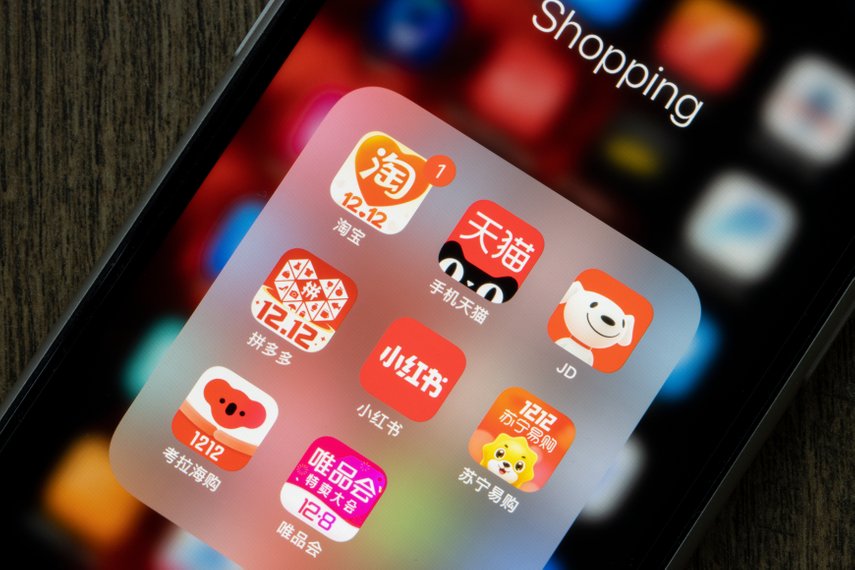
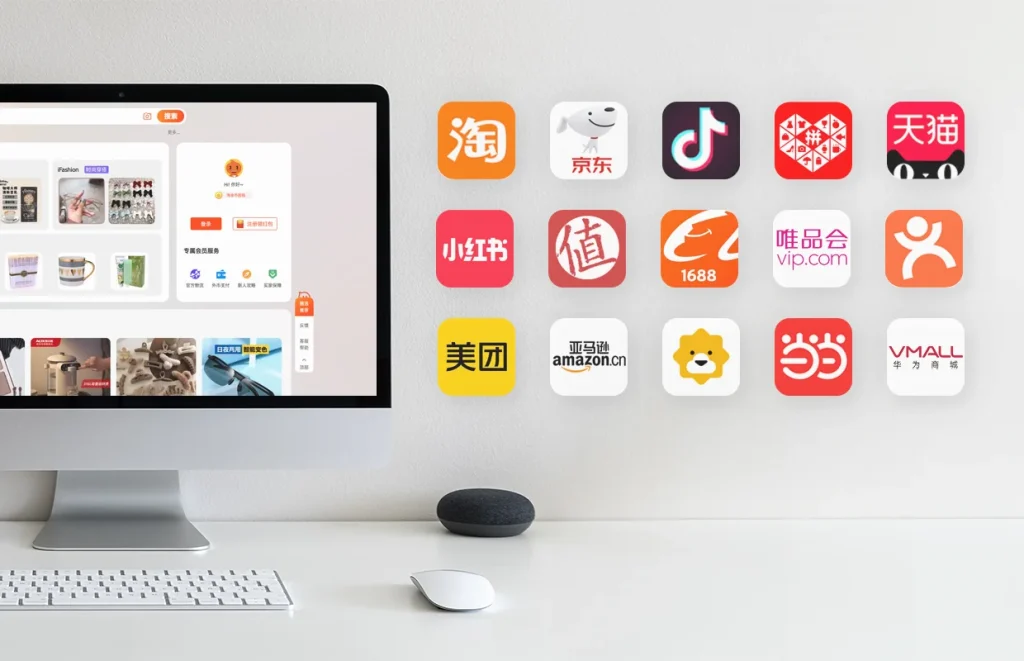
China E‑commerce is multi‑platform. Pick channels based on category, margin, and content strengths.
Core platforms
- Tmall / Tmall Global – strong for branded goods, premium positioning.
- JD / JD Worldwide – trusted logistics for electronics, appliances, and FMCG.
- Pinduoduo (Duoduo) – price‑driven scale and factory‑to‑consumer.
- Douyin (TikTok China) – live commerce and content‑led conversion.
- WeChat Mini Programs – CRM‑rich, brand‑owned funnels and private traffic.
Channel fit quick guide
| Objective | Best First Channel | Notes |
|---|---|---|
| Premium foreign brand launch | Tmall Global | Requires brand authorization & deposit |
| Electronics / high trust | JD | Fast fulfillment, warranty expectations |
| Value‑tier, fast scale | Pinduoduo | Aggressive pricing; watch return rates |
| Content‑led categories (beauty, fashion) | Douyin | Invest in live‑streaming & KOL ops |
| Retention & CRM | WeChat Mini Program | Integrate with service, loyalty, and offline |
Competitive reality: intense price wars and influencer‑led sales are now the norm, pressuring margins and small sellers—plan for smarter differentiation beyond discounts. Reuters
Compliance pillars for China E‑commerce
A launch that overlooks compliance will stall. Three pillars matter most.
E‑commerce Law (baseline obligations)
China’s E‑commerce Law governs platforms and merchants. It requires business registration (with narrow exceptions), platform identity verification, and cooperation with regulators and tax authorities—plus penalties for non‑compliance. FAOLEX
ICP filing or license (MIIT)
Most China E‑commerce sites and apps that operate in mainland China require ICP filing/recordal with MIIT before going live; the filing process is standardized and includes identity verification and authority approval. Amazon Web Services, Inc.
Entity choices (for domestic selling)
- WFOE/FICE for trading and invoicing in RMB.
- Representative Office for liaison only (no sales).
- Consider a staged approach with Employer of Record (EOR) for staff while you set up the entity.
For a practical primer on the ICP step‑by‑step, see this FDI China guide: Obtaining an ICP License.
Data privacy & PIPL: what every China E‑commerce store must know
The Personal Information Protection Law (PIPL) sets rules on consent, data minimization, cross‑border transfers, and extra‑territorial reach when overseas processing targets individuals in China—directly relevant to China E‑commerce operators. DigiChina
PIPL go‑live checklist
- Name lawful bases for each data use (orders, marketing).
- Localize privacy notices and obtain valid, granular consent.
- Map data flows and assess cross‑border transfer obligations.
- Set up request handling (access, deletion) with response deadlines.
Payments & settlement: how money moves in China E‑commerce
- Expect Alipay and WeChat Pay to dominate conversion on mobile.
- For CBEC, confirm settlement currencies and FX spreads with your PSP.
- For domestic stores, integrate RMB settlement and fapiao issuance aligned with VAT status.
- Use escrow or platform funds release rules to reduce fraud and chargebacks.
Logistics & customer experience: bonded, direct mail, and returns
China E‑commerce relies on speed and reliability. For CBEC, you’ll choose between bonded warehouse fulfillment inside pilot zones (fast delivery, customs‑cleared on order) or direct mail from overseas (slower, simpler). Ensure after‑sales support and clear return addresses—consumers expect painless refunds, especially in fashion and beauty.
Growth engine: content + KOLs + live commerce
Short‑video and live‑streaming drive demand across China E‑commerce.
Content operating model
- Weekly content calendar: education, product demos, UGC remixes.
- Live‑streaming anchors: mix of in‑house hosts and external KOLs.
- Offer structuring: bundles, gifts‑with‑purchase, limited‑time coupons.
- Private traffic: move viewers to WeChat for retention and service.
KOL contract must‑haves
- Clear GMV and ROI targets; refund/chargeback rules.
- IP usage windows for repurposing content.
- Transparent traffic sourcing (no click farms).
Cost model & KPIs for China E‑commerce
Budget both the build and the burn. Use this table to set expectations.
| Budget Bucket | Typical Components | First‑quarter Range (USD) | KPI to Watch |
|---|---|---|---|
| Store setup | Deposits, design, product listing, translations | 15k–50k | Time to first sale |
| Compliance | Entity, ICP, trademarks, contracts | 10k–40k | Zero compliance blockers |
| Marketing | KOL fees, live‑stream ops, ads, sampling | 30k–150k | CAC, GMV, ROI |
| Logistics | Bonded stock, 3PL fees, packaging | 20k–80k | On‑time delivery, return rate |
| Team | Store ops, customer service, moderation | 20k–60k | Response time, CSAT |
Reality check: relentless discounting and high return rates squeeze margins across platforms—plan pricing tests, value bundles, and differentiated service rather than chasing the lowest price. Reuters
90‑day launch plan for China E‑commerce
Days 1–15 — Select CBEC vs. domestic, confirm category eligibility on the Positive List, and finalize brand authorization. english.www.gov.cn
Days 16–30 — Open platform accounts, lock ICP path, draft PIPL‑aligned privacy notices, and book a bonded slot. Amazon Web Services, Inc.DigiChina
Days 31–60 — Publish store, seed SKUs, schedule KOLs, and run paid tests on Douyin/WeChat.
Days 61–90 — Ramp live commerce, iterate creative, optimize logistics, and roll out WeChat CRM for repeat sales.
Risks & mitigation in China E‑commerce
| Risk | Why it Happens | Mitigation |
|---|---|---|
| Category not on Positive List (CBEC) | Regulatory limits | Confirm HS codes and list eligibility; consider domestic import path. (english.www.gov.cn) |
| Platform penalties | Policy breaches, delayed refunds | Train ops on platform rules; tighten SOPs and response SLAs. |
| Data/privacy violations | Weak consent or over‑collection | PIPL‑aligned notices; DPIAs; minimize data; audit cookies/SDKs. (DigiChina) |
| Price war margin squeeze | Traffic auctions, live‑stream fees | Differentiate via bundles, service, and community; protect floor pricing. (Reuters) |
| Compliance gaps (registration/tax) | E‑commerce Law duties missed | Verify merchant identity, tax filings, and platform obligations. (FAOLEX) |
How policy shapes China E‑commerce in 2025
- E‑commerce Law: sets merchant registration and platform liability baselines that every operator must meet. FAOLEX
- PIPL: extends to overseas processors targeting PRC individuals; China E‑commerce stores with cross‑border flows should plan for assessments and possible localization. DigiChina
- CBEC “Positive List”: keeps expanding categories (e.g., sporting goods, beverages), enabling more cross‑border assortments without full import procedures. english.www.gov.cn
- Market size & users: digital retail remains a large slice of total retail, supported by a 1.12b‑user internet base—ample demand, provided brands compete smartly. National Bureau of Statistics of Chinaenglish.www.gov.cn
FAQs on China E‑commerce
Do I need an ICP if I sell only via platforms?
If your store relies solely on marketplace storefronts, the platform handles hosting; but brand‑owned sites or Mini Programs typically need ICP filing/recordal under MIIT. Confirm your architecture before launch. Amazon Web Services, Inc.
Can I sell any product through CBEC?
No. Your SKU must sit on the Positive List for cross‑border retail imports, otherwise you’ll need domestic import procedures and registrations. english.www.gov.cn
What about privacy and cookies?
PIPL requires clear, informed consent and purpose limitation. If you export personal data outside China, additional rules apply. DigiChina
Is the market still growing?
Yes, but growth is more selective and competition is tougher—manage discounting risk and focus on value creation. National Bureau of Statistics of ChinaReuters
Sources
- World Bank — Macro and logistics context for China E‑commerce planning. worldbank.org
- UNCTAD — Trade and digital economy insights relevant to cross‑border commerce. unctad.org
Key references cited for this article:
- National Bureau of Statistics — 2024 online retail sales & share. National Bureau of Statistics of China
- State Council / MOF — CBEC “Positive List” update effective March 1, 2022. english.www.gov.cn
- China Internet Network Information Center (via official release) — user base & penetration, June 2025. english.www.gov.cn
- PRC E‑commerce Law (English translation) — platform and merchant obligations. FAOLEX
- PIPL translation (DigiChina, Stanford) — scope and requirements. DigiChina
- Reuters — the evolving price‑war context in e‑commerce. Reuters
Why this matters now
China E‑commerce remains a powerhouse, but the winners pair compliance discipline with creative, content‑led selling. Brands that get the structure right—ICP, privacy, tax, logistics—and invest in live commerce, private traffic, and service will keep growing even as price pressure intensifies.
Post‑article message:
Want a phased route into China E‑commerce? Launch via CBEC while you secure ICP and entity, or hire a local team first through an EOR. When you’re ready to scale, migrate to a domestic store with full compliance and RMB invoicing. A local advisor can help you compress timelines and control risk.