
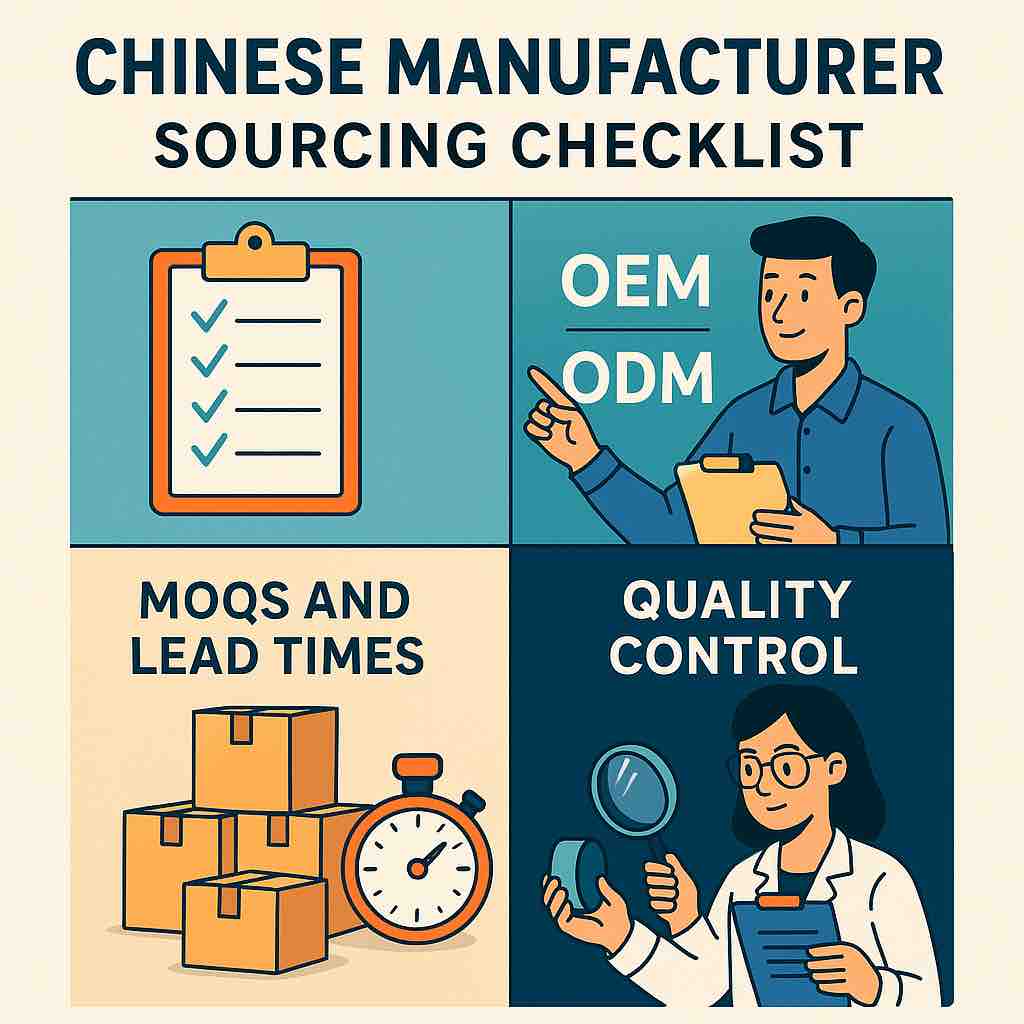
A Chinese manufacturer can take you from prototype to scale at speed, but the right choice calls for structure, evidence, and clear contracts. This guide lays out a field‑tested roadmap for selecting and managing a partner in chinese manufacturing so your product ships on time, meets specs, and protects your margin.
Sourcing landscape in chinese manufacturing (2025 snapshot)
China still offers scale, deep clusters, and broad component ecosystems. For most product categories, capacity is stable, while lead times vary by season and port congestion. Treat pricing as a moving target tied to materials, energy, and exchange rates. Your chosen Chinese manufacturer should explain cost drivers and signal risks early so you can plan buffers.
Shortlisting a Chinese manufacturer: where and how to start
Start wide, then filter fast. Build a list of 12–20 candidates using trade directories, show lists, and peer referrals. Ask for legal name, factory address, business scope, export license, HS codes, and three references. A credible Chinese manufacturer replies promptly, offers a video walk‑through, and shares sample timelines without hedging.
Quick screen
- Product fit and recent export markets
- Certifications relevant to your SKU
- Willingness to sign an NNN governed by Chinese law
- Sample lead time and capacity for peak season
OEM vs. ODM: picking the model that fits
OEM means you own the design; the factory builds to your drawings and BOM. ODM brings a ready‑made design you can private‑label. OEM offers control but needs more engineering bandwidth; ODM speeds launches. Many brands start with ODM for validation, then shift to OEM once volume and specs are stable.
MOQs, lead times, and tooling agreements
Map minimum order quantity across variants, not just the hero SKU. Lock typical lead time (e.g., 25–40 days) and a holiday buffer. If you pay for molds or jigs, state clearly that you own the tooling and can retrieve it at will. Split the first order into two shipments after a pre‑shipment inspection to reduce launch risk.
Negotiation levers (H3)
- Offer a rolling forecast to trim MOQ
- Tie price tiers to volume brackets
- Use staged payments linked to inspection milestones
Quality assurance that sticks: AQL, sampling, audits
Quality isn’t discovered at the dock; it’s designed, trained, and measured.
Golden sample & specs
- Approve materials and finish
- Set tolerances, labeling, and packaging
- Keep signed, dated samples on both sides
AQL & inspections
- Define defect classes (critical, major, minor)
- Pick AQL levels (e.g., 2.5 for majors) and inspection points (inline + pre‑shipment)
- Allow unannounced audits for high‑risk SKUs
Factory audit—china factory audit steps
- Legal: license, tax, export registration
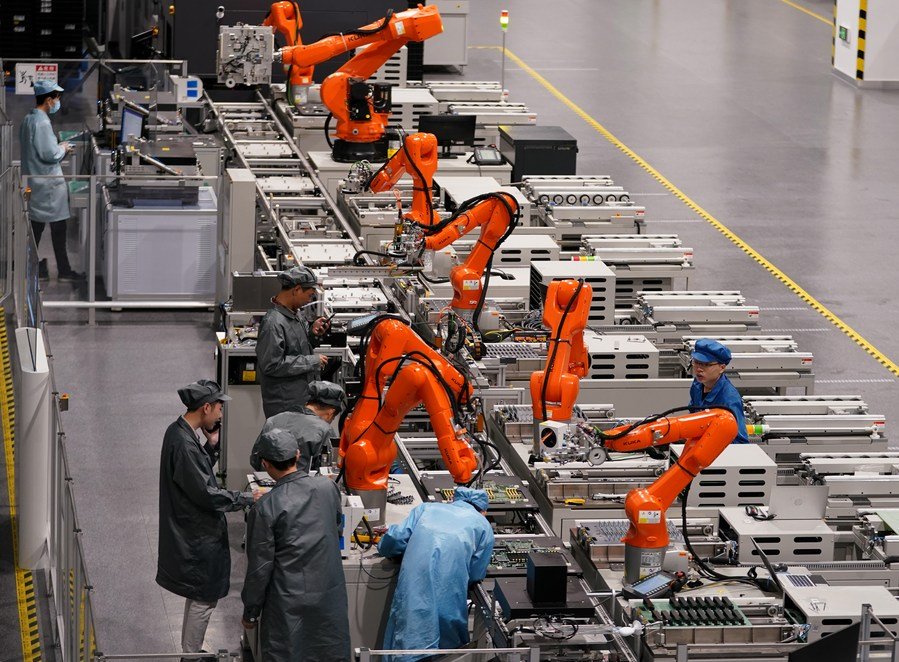
- Operations: equipment list, maintenance logs, calibration records
- People: training, overtime policy, safety drills, grievance channels
Contracts & IP: the NNN playbook
Use an NNN (Non‑Disclosure, Non‑Use, Non‑Circumvention) in Chinese language, enforceable in a Chinese court. Pair it with a Master Supply Agreement that spells out pricing mechanics, delivery penalties, workmanship warranties, and tool ownership. This framework protects drawings, molds, and brand assets while keeping change control tight with your Chinese manufacturer.
What to include
- Governing law and venue in China
- No sub‑contracting without consent
- Per‑breach liquidated damages
- Right to audit direct and critical sub‑suppliers
Compliance & certifications: CE, FCC, FDA, and more
Match certifications to your destination markets and product class: CCC, CE, RoHS, REACH, FCC, UL, FDA, FSC, and more. Ask for test reports tied to your exact SKU and lab contacts for verification. If a Chinese manufacturer cites a generic report, request SKU‑specific testing before mass production.
Helpful context
Benchmark the trade and logistics backdrop using World Bank data portals and UNCTAD investment/trade reports to stress‑test lead times and shipping plans. These sources help you see how policy shifts or port cycles could affect procurement.
Logistics & Incoterms: from factory gate to final mile
Pick Incoterms that match your risk appetite and freight strategy.
- EXW: you handle pickup, export, and all freight—lowest unit price, highest risk.
- FOB: the factory clears export and loads on vessel—a balanced default with a Chinese manufacturer.
- CIF/CIP: seller books carriage and insurance—review coverage and handover points carefully.
Confirm nearest ports (Shenzhen, Ningbo, Shanghai, Qingdao) and blackout dates. Insist on ISTA packaging tests, carton strength data, and pallet patterns that protect goods and cut airspace waste.
Cost & negotiation: what really moves COGS
Transparency fuels better deals. Ask for a cost build‑up and look for win‑wins rather than pure price cuts.
| Cost Lever | What it Affects | Typical Impact | How to Improve |
|---|---|---|---|
| Materials & yield | Unit cost, scrap | 10–40% of COGS | Switch grades, optimize nesting, co‑engineer with the factory |
| Labor & takt time | Throughput, overtime | 5–20% | Line balancing, clear SOPs, mistake‑proofing |
| Tooling & amortization | Upfront capex | High for new SKUs | Amortize per unit; confirm mold care & storage |
| Packaging | Damage rate, freight | 2–8% | Right‑size cartons; run drop/compression tests |
| Freight & duty | Landed cost | Variable | Improve carton density; ship on consolidated lanes |
A data‑driven approach signals professionalism to your Chinese manufacturer and often unlocks cooperative engineering ideas.
ESG & worker welfare: building brand‑safe supply chains
Your brand reputation rides on factory conditions. Set a Supplier Code of Conduct and audit against it. Focus on time‑keeping accuracy, hazard controls, PPE use, dorm standards, emergency drills, and remediation plans. Document each corrective action and closure. Responsible procurement is good risk management and good business.
Digital diligence & AI checks
Speed screening with smart tools. Translate licenses, verify addresses with satellite maps, and search litigation databases. Cross‑check product pages for client overlaps. Use AI to flag inconsistencies, then verify with humans. This approach catches issues early—before you hand over drawings to a Chinese manufacturer.
When to dual‑source or switch a Chinese manufacturer
Add a second line when demand outruns capacity, a critical component is single‑sourced, or defect rates spike twice in a quarter. Keep BOMs identical and qualify both lines to the same spec. If you must switch, retrieve molds, jigs, and digital files per contract so the next Chinese manufacturer can hit your standards from day one.
Local experts & EOR support to manage your supplier
If you don’t have a China entity or staff on the ground, plug the gap with a local team that can visit factories, witness inspections, and manage approvals. For compliant hiring of local project managers—without opening an entity—consider FDI China — Employer of Record & Expansion Support. Having a bilingual point person near your partner keeps communication crisp and accountability high.
30‑day action plan to lock a partner
- Days 1–5: Build the candidate list; request licenses, references, and sample timelines from each Chinese manufacturer.
- Days 6–10: Run video walk‑throughs; send RFIs and NNN drafts.
- Days 11–15: Collect quotes; set provisional MOQs, tooling notes, and lead times.
- Days 16–20: Commission an on‑site audit; approve Golden Sample; publish the inspection plan.
- Days 21–25: Finalize contracts; link payments to QC milestones and delivery windows with your Chinese manufacturer.
- Days 26–30: Pilot run, inline inspection, and a split shipment to de‑risk launch.
FAQs
How can I reduce MOQ?
Share a six‑month forecast, agree to price tiers, or pre‑pay materials. Many suppliers will trade MOQ for schedule certainty.
What payment terms are common?
For new buyers, 30/70 (deposit/balance after inspection) is typical. With trust, 20/80 or open account on repeat SKUs may be possible.
What if a factory resists third‑party QC?
Treat it as a red flag. A transparent partner should welcome independent inspection—especially on first orders with a Chinese manufacturer.
Sources (top two to keep inside the article)
- World Bank — Trade & logistics data for planning and risk checks. worldbank.org
- UNCTAD — Investment and trade insights that frame sourcing decisions. unctad.org
Additional external resource: Incoterms overview from the International Chamber of Commerce: iccwbo.org.
Why this matters now
Capacity and compliance pressures are real, yet China’s clusters still deliver world‑class speed and scale. With a clear process, tight documentation, and steady QA, partnering with the right Chinese manufacturer remains a durable competitive edge in chinese manufacturing.
Post‑article message:
Need help shortlisting, auditing, or hiring a local project manager to oversee your Chinese manufacturer? Speak with a China‑based advisor at FDI China.