
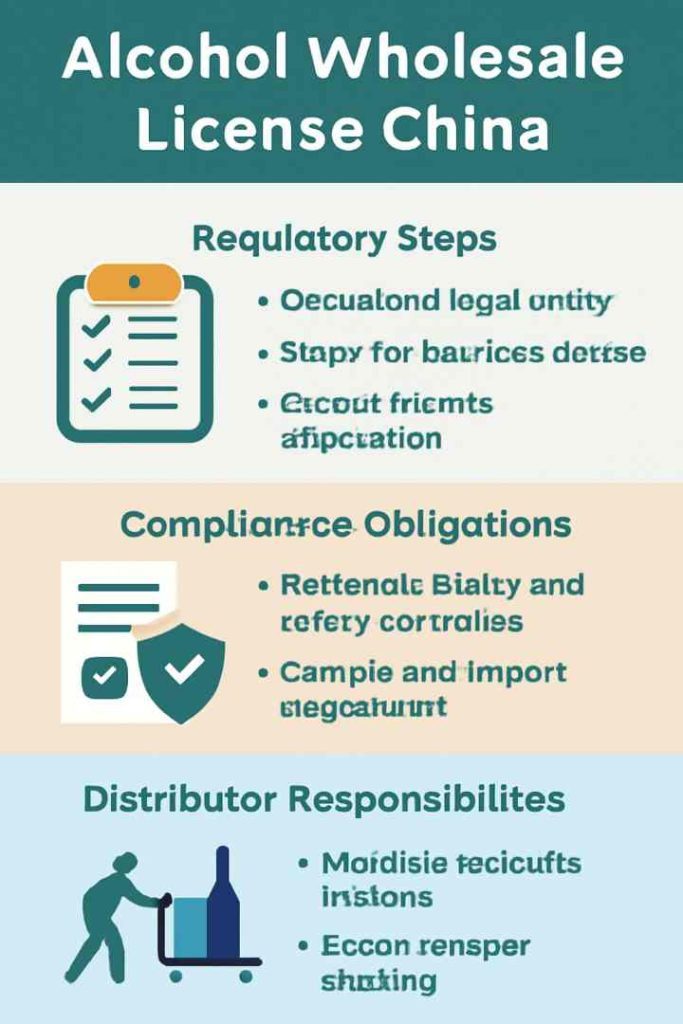
alcohol wholesale license China is a mandatory requirement for any foreign company intending to distribute alcoholic beverages within China. The Chinese government has specific regulations and licensing processes for wholesalers that aim to ensure public safety, tax compliance, and adherence to local distribution laws. Understanding the licensing process, its requirements, and associated obligations is essential for foreign companies seeking to enter the alcohol distribution market in China.
- What the alcohol wholesale license China allows and why it is necessary
- Regulatory authorities responsible for issuing the license
- Step-by-step application process for obtaining the license
- Business scope restrictions and what can be sold under this license
- Required documentation and eligibility criteria for foreign distributors
- Taxation and reporting obligations for alcohol distributors in China
- Compliance with China’s alcohol packaging and labeling regulations
- Warehouse and storage requirements for alcohol distribution
- Penalties for non-compliance with alcohol wholesale laws
- FDI insights: Market entry strategies and licensing tips for foreign companies
What Alcohol Wholesale License China Actually Allows
The alcohol wholesale license China permits licensed distributors to buy alcoholic products from manufacturers or importers and sell them to retail businesses, bars, restaurants, and other wholesale clients. This license does not authorize the direct sale of alcohol to consumers; that is reserved for retail businesses or licensed online platforms.
Foreign companies seeking to distribute alcohol in China must first obtain this wholesale license from the State Administration for Market Regulation (SAMR), the primary body responsible for issuing and overseeing alcohol distribution licenses in China. Compliance with national laws regarding packaging, import/export controls, and tax obligations is also required under the alcohol wholesale license China framework.
Regulatory Authorities Overseeing the Alcohol Wholesale License
In China, several government agencies regulate alcohol distribution. These include:
- State Administration for Market Regulation (SAMR): SAMR is responsible for issuing the alcohol wholesale license and ensuring that wholesalers follow the national legal framework.
- General Administration of Customs (GACC): GACC handles alcohol import/export procedures and ensures compliance with international trade and local regulatory requirements.
- National Taxation Bureau: This authority ensures that alcohol distributors are paying the correct taxes and meeting their reporting obligations.
- Local Health Authorities: Responsible for enforcing health and safety regulations related to alcohol production, packaging, and distribution.
Foreign investors can refer to international regulatory frameworks, such as the UNCTAD trade and regulatory guidelines or the OECD trade policy reports, for insights into aligning their operations with China’s alcohol laws.
Step-by-Step Process for Obtaining the Alcohol Wholesale License in China
To obtain the alcohol wholesale license China, foreign companies must complete several steps, ensuring compliance with both national and local regulations. The process can vary slightly depending on the city or province, but generally includes the following key stages:
- Company Registration: The first step is to register your company with the local State Administration for Market Regulation (SAMR). Ensure your business scope explicitly includes alcohol wholesale distribution activities.
- License Application: Submit an application for the alcohol wholesale license to SAMR, along with required documents such as your business registration certificate, tax registration, and proof of business location.
- Regulatory Review: SAMR will review your application and may conduct an on-site inspection of your facilities to ensure they meet health, safety, and operational requirements.
- Approval and Issuance: If your application meets all the requirements, SAMR will issue the alcohol wholesale license, which must be displayed prominently at your business location.
Companies should also ensure that they comply with additional licensing procedures set by IMF policy reports, especially concerning taxation and customs procedures for alcohol distribution.
Business Scope for Alcohol Wholesale in China
When applying for the alcohol wholesale license China, it is essential to clearly define the scope of your business. This should include the specific types of alcohol you plan to distribute, such as beer, wine, spirits, or cigarettes, and whether you plan to focus on domestic or international distribution.
The business scope must be aligned with the products and services you intend to sell, as well as with regulatory expectations set by SAMR and other relevant authorities. If you plan to expand your product offerings later, you may need to update your business scope and apply for a license amendment.
Required Documentation for Alcohol Wholesale License Application
Foreign companies applying for an alcohol wholesale license China must provide comprehensive documentation to SAMR. The standard documentation requirements include:
- Business registration certificate
- Tax registration certificate
- Legal representative identification and authorization
- Property lease or ownership certificates (for the business location)
- Evidence of capital and financial stability
- Health and safety inspection reports (for warehouses and retail operations)
- Supply chain and product source verification
Foreign investors can reference OECD trade guidelines for best practices on global supply chain documentation and compliance with local regulations.
Taxation and Reporting Obligations for Alcohol Distributors
Foreign companies holding an alcohol wholesale license China must comply with China’s tax requirements. These obligations include:
- Value-Added Tax (VAT): Alcohol sales in China are subject to VAT, which must be reported to the local tax authorities. VAT is typically levied at rates between 6% and 13%, depending on the type of alcohol.
- Excise Tax: Alcohol products imported or produced locally are subject to excise duties, which must be paid at the time of import or manufacture.
- Income Tax: Alcohol wholesalers are required to file corporate income tax (CIT) returns annually, reporting both gross revenue and taxable profit.
It is recommended that foreign distributors work with local accounting firms and tax advisors to ensure that they comply with China’s national taxation policies and fulfill all VAT, excise, and CIT obligations.
Compliance with Packaging and Labeling Regulations
Another crucial element of the alcohol wholesale license China is adherence to China’s packaging and labeling regulations. All alcohol products must be properly labeled with the following:
- Health warnings: Alcohol packaging must display mandatory health warnings in both Chinese and English, as required by Chinese law.
- Product information: Labels must include product origin, ingredients, alcohol content, and expiry dates.
- Barcodes and tracking codes: Products must have unique barcodes for customs tracking, as well as detailed lot numbers for inventory and recall purposes.
Retailers and distributors are encouraged to work closely with suppliers and follow established international practices for labeling, which can be found in the FDA regulations for labeling or the EU food labeling guidelines for reference.
Penalties for Non-Compliance with Alcohol Wholesale Regulations
Failure to comply with the alcohol wholesale license China can result in significant penalties, which can range from fines to the revocation of the license itself. In severe cases, the company may face criminal charges, particularly for repeat offenders or companies found to be distributing unlicensed products.
- Fines: Failure to comply with tax reporting, product labeling, or sales restrictions can result in heavy fines.
- License revocation: In cases of severe non-compliance or repeated violations, the alcohol wholesale license may be revoked, preventing further operations.
- Criminal prosecution: If fraudulent activities are detected, such as the sale of counterfeit products or tax evasion, criminal charges may be brought against the company or its representatives.
To avoid these risks, foreign distributors must implement a robust compliance system, following guidelines outlined by institutions like the OECD Tax Guidelines and other regulatory bodies.
How to Strengthen Compliance and Stay Ahead of Regulatory Changes
Foreign distributors can minimize the risk of penalties by ensuring strong compliance with all relevant regulations. Key steps include:
- Regular training: Ensure all employees are trained on alcohol licensing laws, packaging requirements, and tax obligations.
- Internal auditing: Set up regular audits to ensure that all aspects of your operations— from distribution to labeling—are compliant with Chinese laws.
- Documenting all transactions: Maintain clear records of all invoices, sales, and supplier contracts to ensure transparency and accountability.
- Working with local compliance experts: Hire or consult with local legal and regulatory experts who are familiar with China’s alcohol laws and can help navigate any regulatory changes or updates.
By taking these proactive measures, foreign investors can ensure smooth operations, minimize legal risks, and optimize their business for long-term success in China’s competitive alcohol distribution market.
FDI Insight: Building a Strong Market Entry Strategy for Alcohol Distributors
Entering the Chinese market as a foreign alcohol distributor requires careful planning, compliance, and alignment with local regulatory standards. By integrating the alcohol wholesale license China into a broader market-entry strategy, companies can streamline their entry process and reduce potential risks.
Many foreign investors use resources like FDI China’s China Company Setup Guide to ensure that their licensing, compliance, and business scope align with regulatory expectations from the very beginning.
Additionally, understanding the specific requirements for tobacco, alcohol, or food-related licenses will help foreign distributors navigate industry-specific challenges and build a compliant, scalable business model in China.
Conclusion: The Importance of Obtaining the Alcohol Wholesale License in China
Obtaining the alcohol wholesale license China is crucial for any company wishing to legally distribute alcohol within China. By following the correct licensing procedures, maintaining ongoing compliance, and staying informed on regulatory updates, foreign distributors can avoid costly penalties and build a successful business.
For foreign companies entering the Chinese market, a clear understanding of the alcohol wholesale license China requirements—along with a proactive compliance strategy—will be key to ensuring long-term growth and sustainability in the world’s largest alcoholic beverage market.