
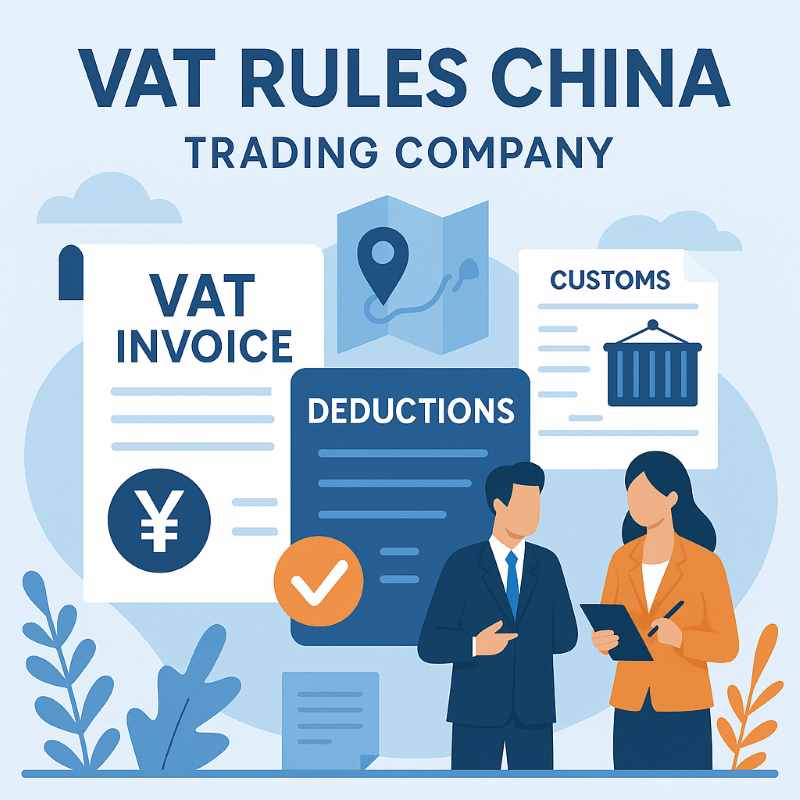
VAT rules China are a critical operational and compliance factor for foreign trading companies conducting import, export, distribution, or value-added service activities in China. As 2025 regulatory updates increase digital oversight, strengthen invoice verification, and align VAT enforcement with international tax governance standards, foreign companies must clearly understand how VAT works to avoid penalties and maintain smooth operations.
- Overview of VAT rules China for trading companies
- Applicable VAT rates for goods and services in 2025
- Input VAT deduction requirements
- Fapiao (VAT invoice) compliance rules
- VAT rules China for import and export trading
- VAT refund eligibility and documentation
- Zero-rated and exempt VAT categories
- Cross-border VAT and withholding interactions
- Common VAT audit risks in China
- Best practices for foreign trading companies
Understanding VAT Rules China for Foreign Trading Companies
The VAT rules China framework applies to nearly all trading activities involving goods and taxable services. Trading companies are generally taxed on the value added at each transaction stage through China’s VAT system, administered by the State Taxation Administration. Foreign companies must comply not only with tax filing rules but also with complex documentation, fapiao requirements, and customs regulations.
Many international companies benchmark China’s VAT system against global standards from institutions such as the OECD and cross-border reporting expectations shaped by global finance bodies like the International Monetary Fund.
VAT Rates in 2025 Under VAT Rules China
Foreign trading companies must understand the VAT rates that apply to their business models:
- 13% for most goods including manufacturing and trading activities
- 9% for agricultural products, transport services, and utilities
- 6% for modern services including consulting, R&D, and logistics support
- 0% for certain export goods and services
VAT rules China require trading companies to correctly classify goods and services to avoid filing discrepancies and audit exposure.
Input VAT Deduction Requirements
To claim deductions, foreign trading companies must comply with strict rules under VAT rules China:
- Hold valid and correctly issued special VAT fapiao
- Ensure invoices match goods or services received
- Verify supplier qualifications
- Record transactions promptly in the VAT system
- Ensure digital invoice authenticity under China’s e-fapiao platform
China’s move toward nationwide digital invoices resembles systems implemented in other jurisdictions following ISO-compliant standards for secure digital documentation.
Fapiao Issuance and Compliance Obligations
The fapiao (VAT invoice) is central to VAT rules China. Trading companies must:
- Issue fapiao for all taxable transactions
- Ensure invoices include correct tax codes, goods description, and tax rates
- Store digital invoices in compliant formats
- Use approved tax-control equipment or digital invoice systems
Invalid fapiao may lead to denied deductions, penalties, or audits by tax bureaus.
VAT Rules China on Import Trading Activities
Import transactions are taxed at customs based on VAT rates applicable to the goods. Importers must pay VAT at the border and later use the customs import certificate as input VAT for deduction. Customs requirements are detailed through resources provided by China Customs.
Foreign trading companies must also ensure HS code accuracy, proper valuation, and compliant transaction structures to avoid mismatches between customs declarations and VAT filings.
VAT Rules China for Export Trading
Export goods may qualify for:
- Zero-rated VAT (VAT rate 0%)
- VAT exemptions
- VAT refunds based on export classification
To claim export VAT refunds, companies must satisfy documentation requirements, including:
- Export declaration forms
- Purchase fapiao
- Logistics and customs documents
- Bank receipt or foreign exchange verification
Refund accuracy is critical, as tax authorities increasingly use digital audit tools inspired by guidelines from the World Bank and other global oversight bodies.
Zero-Rated and VAT-Exempt Services
VAT rules China allow certain services—mainly export-related—to qualify for zero-rated VAT, including:
- International logistics
- Cross-border R&D
- Technology transfer
Companies providing these services must maintain strict documentation to validate zero-rated treatment.
Cross-Border VAT and Withholding Tax Interaction
Cross-border service purchases (e.g., consulting, IP licensing, digital services) may trigger:
- Reverse-charge VAT obligations
- Withholding tax obligations
- SAFE documentation for cross-border payments
The interaction of these rules requires careful contract structuring and proper classification of fees. Companies often align such decisions with market-entry frameworks described in FDI China’s China Market Entry Solutions.
Common VAT Audit Risks in China
Foreign trading companies face heightened VAT audit scrutiny for issues such as:
- Mismatched purchase and sales records
- Invalid or missing fapiao
- Incorrect tax classifications
- Abnormal refund claims
- Supplier non-compliance
Authorities increasingly use digital monitoring approaches similar to global standards adopted by public-health and compliance organizations such as the World Health Organization.
Best Practices for Foreign Trading Companies
To navigate VAT rules China effectively, companies should:
- Use approved digital VAT systems for issuing invoices
- Verify supplier qualifications regularly
- Conduct monthly VAT compliance reviews
- Align customs declarations with VAT filings
- Maintain organized documentation for audits
- Work with specialized accounting and tax advisors
Foreign investors often design their operations using structured compliance approaches similar to FDI China’s company setup guidelines.
Conclusion
The VAT rules China landscape for foreign trading companies continues to evolve alongside digitalization and increased compliance enforcement. By understanding VAT rates, deduction rules, fapiao compliance, and cross-border tax interactions—and by maintaining complete documentation—foreign trading companies can operate efficiently and avoid costly regulatory penalties. Proactive compliance is essential for long-term success in China’s dynamic trading environment.